





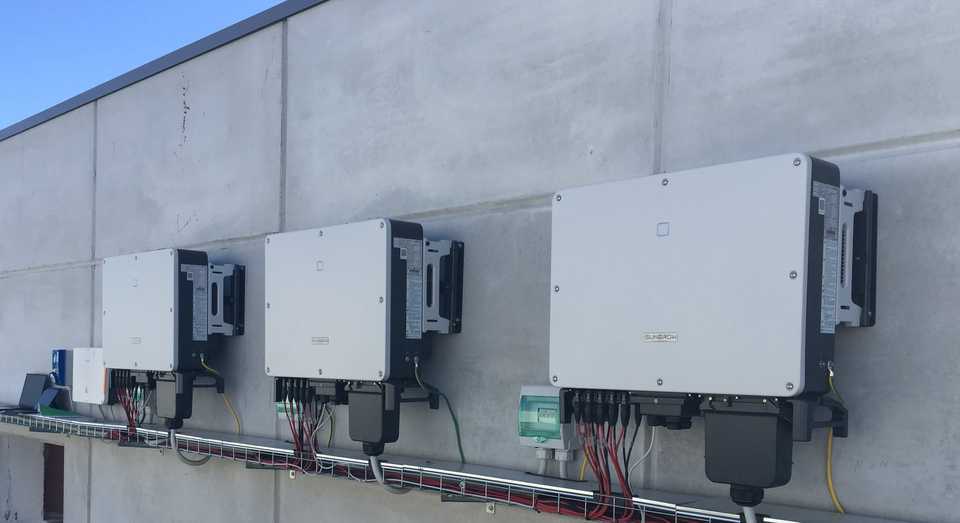
Chinese solar inverter and energy storage manufacturer Sungrow is set to increase prices across several of its inverter and energy storage product lines by 5% to 15%, effective September 20, 2026. The company has attributed the adjustment to rising raw material and component costs, making this its second price increase of the year.
According to Sungrow’s latest customer notice, orders that are formally signed and placed before September 20 will continue under their existing contractual pricing. Orders placed on or after the effective date, however, will be subject to the new prices.
Different Products to See Different Increases
The price adjustment will vary depending on the product category.
Prices for string, modular, and matrix inverters are expected to increase by approximately 5% to 10%, while medium-voltage grid-connected inverters will see larger increases of around 10% to 15%.
In the energy storage segment, power conversion systems (PCS) will become 5% to 10% more expensive, while integrated PCS solutions are expected to rise by 10% to 15%.
Sungrow will also increase prices for its PT utility-scale energy storage systems and PS commercial and industrial (C&I) storage systems by approximately 5% to 10%.
Rising Raw Material Costs Behind the Move
Sungrow said the decision follows higher-than-expected increases in upstream material costs. The company stated that it had already taken measures such as securing long-term supply agreements, optimizing procurement and reducing internal expenses, but these efforts were not enough to offset the growing cost pressure.
A manager from Sungrow’s energy storage business told Chinese media that copper and aluminum prices were among the major factors behind the latest adjustment. The company also indicated that the price increase could help address increasingly aggressive low-price competition within the market.
The wider supply chain is facing similar pressures. According to data from the China Nonferrous Metals Industry Association (CNMIA), average domestic copper prices increased by 31.4% during the first half of 2026, while aluminum prices climbed 18.8%.
Silver prices also recorded significant increases, while power electronics manufacturers have experienced higher costs and tighter supplies for components such as printed circuit boards (PCBs), insulated-gate bipolar transistors (IGBTs), and memory chips.
Part of the component supply pressure has been linked to growing demand from AI data centers and other high-performance computing infrastructure, which are consuming increasing volumes of advanced electronic components.
Price Increases Across China’s Storage Industry
Sungrow is not the only manufacturer responding to these rising costs.
During the first quarter of 2026, companies including Sungrow, Ginlong Technologies, and Sineng increased prices for certain energy storage products by roughly 6% to 10%.
The trend has continued throughout the year. Sinexcel, for example, increased prices for products including storage microgrids and residential energy storage systems by 10% to 30% from July 21. Inovance subsequently raised prices for storage converters and integrated storage systems by 5% to 15% from August 30.
The China Energy Storage Alliance has reported that more than 10 companies operating in the energy storage supply chain have announced price increases since July, with adjustments ranging from 2% to as much as 30%.
Battery Industry Also Faces Additional Costs
The pressure is not limited to inverters and energy storage equipment. China’s battery industry is also facing additional costs following the introduction of a 2% consumption tax on lithium-ion batteries on September 1, 2026.
The tax rate is scheduled to increase further to 4% from September 1, 2027, potentially adding another layer of cost pressure across the battery and energy storage supply chain.
What This Means for the Solar and Storage Market
Sungrow’s latest announcement highlights a broader shift in China’s solar and energy storage industry. After years of intense price competition, manufacturers are increasingly attempting to pass higher raw material, component and operating costs down the supply chain.
However, higher announced prices do not necessarily mean that actual transaction prices will rise by the same amount. Large-scale projects and utility tenders often involve significant price negotiations, meaning manufacturers may still offer discounts to remain competitive.
The long-term impact of these increases will largely depend on copper, aluminum and other raw material prices, component availability, battery costs, and competitive bidding conditions.
For solar developers, EPC companies, distributors and energy storage buyers, the latest adjustment could make procurement timing increasingly important, particularly for projects that are already in the planning or purchasing stage.
Source: This article has been paraphrased and adapted from a report originally published by pv magazine Global on September 14, 2026. The original report, written by Vincent Shaw, covers Sungrow’s latest price increases for solar inverters and energy storage products. Read the original article on pv magazine Global